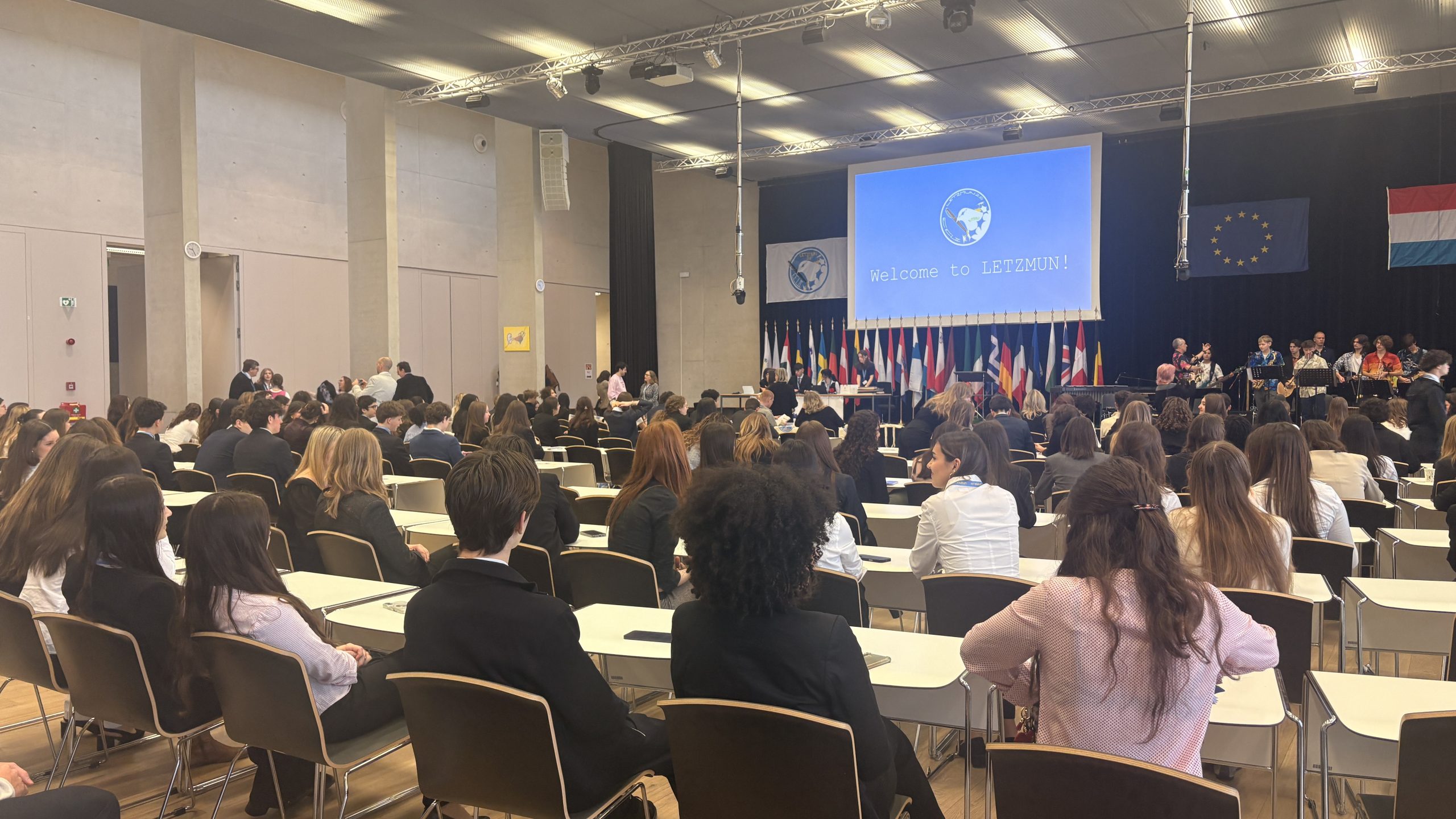
Mamer, Luxembourg – February 5-6, 2026
For the third consecutive year, the European School Luxembourg II (ESL2) in Mamer transformed into a hub of youth diplomacy during the
LETZMUN26 conference, held under the powerful theme:
“We Are All Responsible for World Peace.” Organized almost entirely by students, this year’s edition brought together
186 young delegates from seven schools across Luxembourg and Europe, offering them a unique platform to engage in high-level debates, negotiate as diplomats, and explore solutions to some of the world’s most pressing challenges.
A Student-Led Initiative with Real-World Impact
LETZMUN is more than just a simulation—it’s an immersive experience where students step into the shoes of UN diplomats, representing countries with diverse, and sometimes conflicting, perspectives. This year, participants aged 15 to 18 debated across
nine committees, tackling issues such as
climate change, refugee crises, press freedom, and peacekeeping operations. What makes the event particularly compelling is its requirement for students to advocate for nations they may not personally agree with, including
Russia, the United States, and others. This exercise pushes them to develop
critical negotiation skills, empathy, and creative problem-solving—essential tools for future leaders.
The conference kicked off with a
formal opening ceremony, featuring keynote speeches from distinguished guests, including
Claude Wiseler, President of Luxembourg’s Chamber of Deputies,
Tony Baird, Deputy Chief of Mission of the American Embassy, and
Christos Floros, leader of Project Monnet and alumni from Lux1. In his address, Mr. Wiseler drew parallels between his role in fostering dialogue among political parties and the students’ mission to bridge divides in their debates.
“Ensuring that every voice is heard and respected, even when opinions differ, is the foundation of both democracy and peace,” he remarked—a fitting introduction to two days of intense, yet constructive, discussions.
Beyond the debates, LETZMUN fostered a sense of community. The event included
lobbying sessions, social gatherings, and cultural performances, such as a jazz concert by the Periscolaire jazz band and a piano recital by student Tim Baraga. The closing ceremony featured
musical performances, awards, and even a collaborative TikTok video, capturing the energy and camaraderie of the participants.
The Role of APEEEL2: Supporting Student-Led Diplomacy
Since its inception,
APEEEL2 has been a proud supporter of LETZMUN, recognizing its value in
empowering students to take ownership of their learning. It gives them an unparalleled opportunity to develop leadership, public speaking, and teamwork skills—all while engaging with global issues in a meaningful way. While teachers played a crucial role in guiding preparations—from debate training to logistical support—the conference remains
student-driven, reflecting the initiative and dedication of its young organizers.
This year’s leadership team, including
Co-Secretary Generals Ana-Ilinca Borcoman and Maia-Alexa Berghia,
Heads of Chairs Oriana Ciobanu and Vasileios Viannis, and
Head of Logistics Louis Jaboulay, spent months preparing, ensuring smooth operations and thought-provoking discussions. Once again, we were
deeply impressed by the quality of the students’ interventions, which reflected months of preparation, research, and passion for global issues. Below, we are proud to share the
speech by Oriana-Mara Ciobanu and Vasilis Viannis, Heads of Chairs, whose words captured the spirit of LETZMUN26.
Their efforts, combined with the support of ESL2’s management and teaching staff, made the event a resounding success.
A Growing Tradition of Youth Engagement
LETZMUN26 welcomed students from:
- European School Luxembourg I (Kirchberg)
- International School Michel Lucius
- École Internationale Gaston Thorn
- Lycée Vauban (Metz, France)
- Lycée Georges de la Tour (Metz, France)
- Instituto de Educación Secundaria Concha Méndez Cuesta (Torremolinos, Spain)
The diversity of participants—hailing from different linguistic and cultural backgrounds—mirrored the
multilateral spirit of the UN, with all debates conducted in English.
For those inspired by this year’s event, preparations for
LETZMUN27 are already on the horizon.
In a world where division often dominates headlines, LETZMUN stands as a
beacon of hope—reminding us all that
peace begins with dialogue.
Speech from the Heads of Chairs
“As Heads of Chairs, we’re glad to welcome you to a conference that will challenge your thinking, spark new ideas, and create memories that will stay with you in the long run.
We often speak of world peace as though it were an idea too large for any individual person to influence. Yet history has proven that the greatest changes begin with individuals who choose responsibility over silence.
“We are all responsible for world peace.” These words are simple, yet they carry immense weight.
Peace does not mean the absence of conflict, it means choosing understanding over anger, dialogue over violence, and compassion over fear. This is exactly what this conference stands for. It means recognizing that even when we disagree, we share the same fundamental hopes: safety, dignity, and a future worth believing in.
In a world filled with noise of conflict and division, it is easy to forget that peace begins with something quiet: that is no other than responsibility.
But today, millions continue to suffer from armed conflicts, forced displacement, and humanitarian crises. These realities remind us that peace cannot be achieved through force alone. Military solutions may silence weapons temporarily, but only dialogue, diplomacy, and international cooperation can address the root causes of conflict.
As Albert Einstein said, “Peace cannot be kept by force; it can only be achieved by understanding.” It requires effort, dialogue, and courage. It requires nations to listen as much as they speak, to cooperate rather than compete, and to prioritise humanity over politics.
Model United Nations is often described as a simulation, but anyone who has participated knows it is far more than that. As the youth of today, we have both noticed that our reality is starting to sound very much alike with a UN simulation. It is a gateway to the reality of politics and world governments. It challenges you to think beyond your own perspective, to argue for positions you may not personally hold, and to collaborate with people from different backgrounds, cultures, and ideologies.
However, each of you entered this room with a country to represent, but we also entered it with a responsibility that goes beyond any flag. In a time of constant conflict and uncertainty it shows us that it is still possible to be democratic. It unites us with the world and the generations before us and to come. From the Ancient Greek civilization where it was first invented it persisted and proved its worth, we must not let it end. The pursuit of peace remains one of our greatest responsibilities. Peace is not merely the absence of war; it is the presence of justice and cooperation.
From our shared experiences with MUN we know how important it is to do it correctly but also have fun. Over the next two days, challenge yourselves to speak up, listen carefully, and to engage fully in the ongoing debates, while still enjoying every moment of the experience. We hope you leave this conference not only more confident in your abilities, but also with a true sense of accomplishment and fulfilment. We both wish you all a pleasant and unforgettable time.”