This year was the 3rd annual “Sustainable Week” and it turned into a success, thanks to a joint effort involving the School, the students and the new School Sustainable Forum started this year by the “APEEEL2 Sustainable Working Group” parents and our School Director, Mr Maurice Van Daal.
The agenda of the first meeting of the Forum focused on organizing the Sustainable Week, starting a possible Carbon Footprint analysis in our School, and concrete initiatives to reduce paper waste and a recycle textbooks in our School. Special guests of the meeting so far were: an S5 student presenting a project on Solar Panels, Sodexo explaining how to reduce food waste, and the EIB explaining how it carries out a program to teach students about climate action.
The Sustainable Week lasted five days from 17 to 21 of April with several workshops, initiatives, community events.

Click here to read our article including the week’s Information Booklet with a summary of all events attended by various students’ classes, and for some events by our Ecoresponsibles S1 – S5 students.
Day 1 – Fashion and Sustainable Clothes
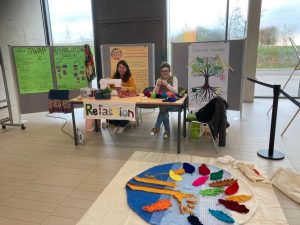
Day 1 started with a workshop on the Ecological Impact in Luxembourg. Almost 100 students learned about the ecological footprint of Luxembourg with a focus on the Fashion sector with Let’s Refashion, a project on the textile sector of Caritas Luxembourg (Rethink your cloths).
Many students helped decorate “L’arbre des Possibles” with emotions and actions.
In the afternoon, approximately 70 students played a Climate Fresk held by Environmental and sustainability education in Luxembourg: many ideas to share, actions to discuss.
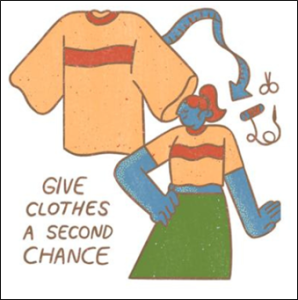
Gaialux asbl proposed a Refashion Corner with parents volunteers from APEEEL2 Sustainable Working Group, with the goal to launch a Clothes Swap Day.
We talked with the students from the Pupils’ Committee who relaunched the communication through their social media: students started to come.
Day 2 – Repairing, Recycling, Learning
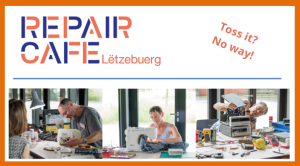
Day 2 involved a group of parents who met for a Repair Cafè to learn how to set up a similar initiative in our School. Thanks to Ben from CELL Luxembourg for his presentation and the encouragement to think of this project as a possible concrete initiative for our School.
A small community of parents joined. Small but very motivated: a Repair Café is an activator of learning by doing, community, bottom-up learning, and intergenerational connection through hands, feelings, and motivation. It could become an activator of many positive side effects on students’ participation (learning how to repair their own items).
During the day, despite the very little communication, more students came to see us at the Refashion Corner. Ivana and Donatella, coordinators of the Refashion Corner, were there with sewing machine and crochet, available to students who would like to learn or try simple upcycling.
 Day 3 – Happiness vs consumerism
 Day 3 – Happiness vs consumerism
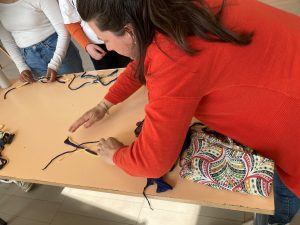
Many more clothes found their way to our Refashion Corner.
Students joined also for some upcycling: young hands-on working of clothes means new life to them versus their fast reduction into waste.
At lunch time, we hosted a workshop with Francesco Sarracino from STATEC to learn about post-growth, happiness versus material growth, consumerism as a mystifying road to happiness, new ways to be prosper where respect of humans and ecosystems get along together
Day 4 – Upcycling into beautiful creations
 Day 4 – Upcycling into beautiful creations
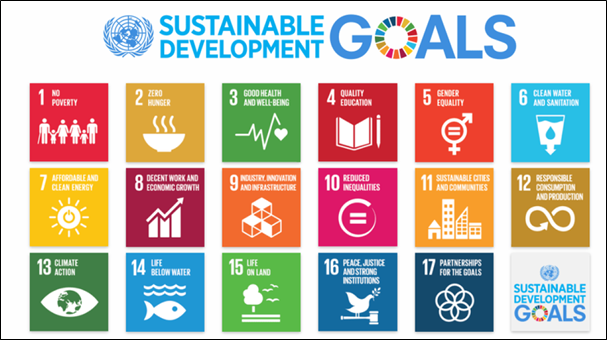
The School selected to focus on “SDG 5: Gender equality” – the achievement of gender equality being the fifth of the 17 Sustainable Development Goals (SDGs) – as no sustainable future is possible without the full respect and empowerment of all human beings.
Meanwhile, the Refashion Corner got ready for the big day of the Clothes Swap. Ivana was invited to give a workshop on Upcycling in a Secondary class: they made beautiful creations starting from old clothes.
Day 5 – Opening our School “black box”: a Carbon Footprint analysis
 Day 5 – Opening our School “black box”: a Carbon Footprint analysis
With growing curiosity and enthusiasm, Day 5 finally saw many students taking the opportunity to give life back to clothes and learn how pleasant it could be.
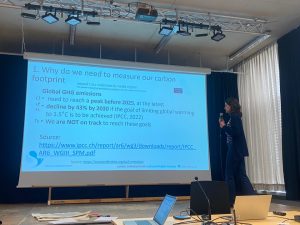
The week closed with the challenge of opening our School ‘black box’: very motivated teachers and students, supportive directors from our School, experts from the EIB, LIST, and the Ministry of Environment of Luxembourg discussed what a Carbon Footprint analysis means.
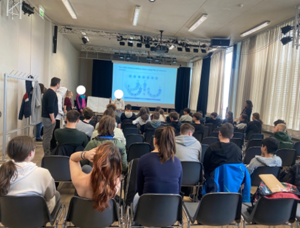 This included the importance of putting in place meaningful actions to become an Ecoschool and how to implement it: the workshop output is a student-teachers-experts task force which will work at the first bottom-up CFP pilot study for our School. We wish them good luck and we will closely follow their work.
Lessons learned …
Overall, the Sustainable Week went very well, but more could have been achieved with a better organization and communication effort between our School Management and the parents of our APEEEL2 Sustainable Working Group. The main lesson to be learnt is that all preparatory work needs to be anticipated and finalized much more in advance, so that students and teachers can be better informed and involved in all events.